Donate
AISSR

American Institute for Scientific and Social Research

Advancing Research. Generating Evidence. Improving Lives.

An interdisciplinary research institute of the Asia-Pacific Youth Culture Foundation, in Seattle, Washington, working across public health, psychology, the social sciences, education and human well-being.

01

Research That Matters

The Institute works on things that happen to people and are measured badly or not at all. What makes that work worth anything is not the subject but how it is done, and these are the four standards it is held to. They are written as commitments, because no study has run yet.

el cajon yacht club · CC BY
Measured where it is not measured

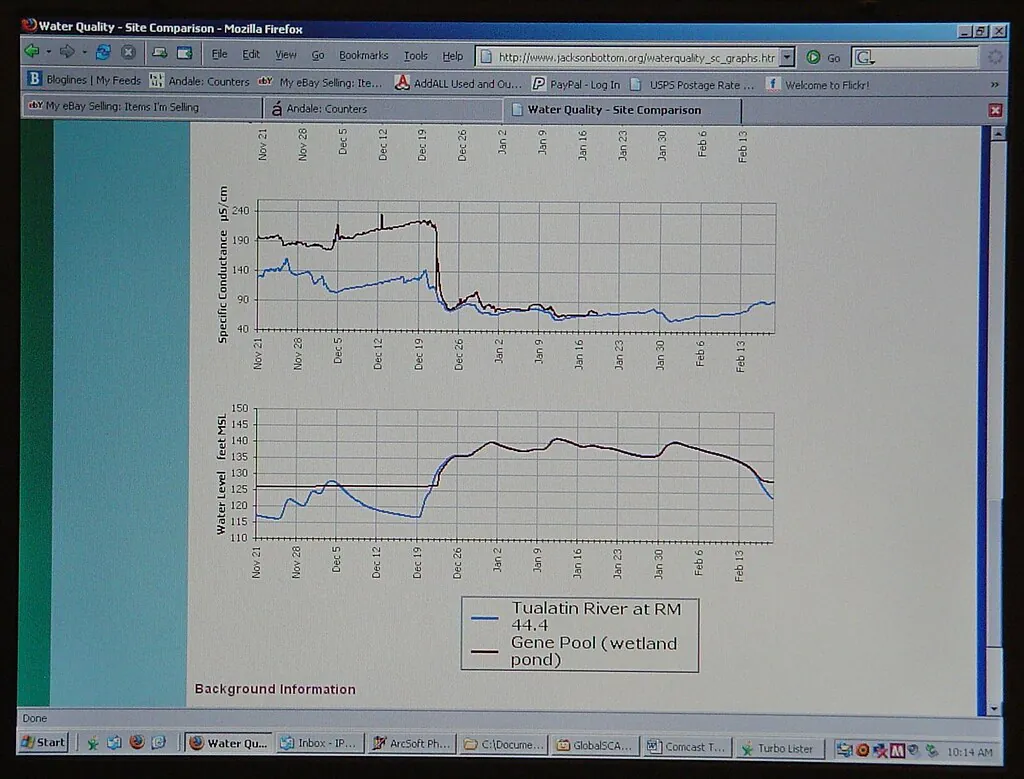
Much of what shapes a life — what a household puts off, what care costs the person giving it, who fraud reaches — is recorded badly, late, or not at all. The first job is a measurement that holds.

NOAA's National Ocean Service · CC BY

Reported whichever way it comes out

A result that contradicts what was expected is still the result. The analysis plan is fixed before collection begins so that the finding cannot be chosen after the fact.

Open enough to be checked

The instrument, the codebook and, where consent and privacy permit, the data, published beside the finding. A result nobody can check is a claim, not evidence.

NobMouse · CC BY

Answerable to the people it is about

What a study asks, how long it takes, what is recorded and how to withdraw are settled and stated before anybody is asked to agree to anything.

02

Featured Research

One of the ten, in full — and the open-access research that already bears on it.

See-ming Lee (SML) · CC BY
PROPOSED STUDYUS-05 · United States

Social Isolation, Psychological Distress, and Community Well-being Among Young Adults in the United States

How far does isolation among young adults track psychological distress, and what in a community offsets it?

What is already known

Published work by other researchers on the same question. Not Institute output, and it is their finding, not ours.

JOURNAL ARTICLEJUL 12, 2026

Determinant Factors of Emotional Mental Health in Adolescents: An Exploratory Study

Introduction: Adolescent emotional and mental health is an important component of overall development and well-being. During adolescence, individuals experience significant biological, psychological, and social changes that may increase vulnerability to…

Florensa Florensa, Nurul Hidayah et al. · JURNAL ILMIAH KESEHATAN SANDI HUSADACC BY

03

Latest Research & Insights

The newest of the open-access work the Institute tracks, in the four subjects it reads in. Every row is somebody else’s paper, carrying its own type, date, title and the opening of its own abstract, and linking to it.

born1945 · CC BY
JOURNAL ARTICLESEP 14, 2026

Measurement Invariance

Psychological researchers routinely compare scores across groups defined by sex, age, educational level, culture, geographical location, clinical status, or other characteristics. Meaningful comparison, however, requires more than demonstrating that a…

E. O. Oladunmoye · Zenodo (CERN European Organization for Nuclear Research)CC BY

albertogp123 · CC BY
JOURNAL ARTICLEOCT 7, 2026

Measurement Invariance Across Groups: Connecting Confirmatory Factor Analytic and Item Response Theory Perspectives

Comparisons of psychological scores across groups, cultures, languages or occasions are interpretable only if the instrument measures the same construct in the same way in each. This note reviews measurement invariance as formulated in the confirmatory factor…

E. O. Oladunmoye · Zenodo (CERN European Organization for Nuclear Research)CC BY

Ravit · CC BY SA
JOURNAL ARTICLEOCT 2, 2026

Uptake, Barriers, and Facilitators of Open Science in Clinical Psychology

Abstract: Open science practices (OSPs) aim to enhance transparency, reproducibility, and research quality, yet empirical research regarding their uptake in clinical psychology remains scarce. The present survey examined OSPs across clinical psychological…

Anja C. Feneberg, Jakob Fink‐Lamotte et al. · Zeitschrift für Klinische Psychologie und PsychotherapieCC BY

JOURNAL ARTICLEMAY 30, 2026

A Scoping Review of School-Based Mental Health Measurement in Adolescents

Adolescent mental health, particularly depression, anxiety, and stress, has a high prevalence and significant impact on their development. Schools, as environments where most adolescents spend a considerable amount of time, hold significant potential in…

Tri Rejeki Andayani, Farida Hidayati · Indigenous Jurnal Ilmiah PsikologiCC BY

JOURNAL ARTICLEMAY 21, 2026

Intra-government democracy and policy responsiveness to public opinion

Does the internal organization of governmental parties influence their ability to respond to shifts in public opinion? We argue that intra-government democracy , defined as the average internal democracy of governmental parties, explains variation in…

Tobias Böhmelt, Lawrence Ezrow · Party PoliticsCC BY-NC

04

Understanding America

Five proposed studies of conditions in American cities and of what they cost the people living in them. Proposed means proposed: no protocol before a review board, no principal investigator, no funding, no field site, no participant and no finding.

Wonderlane · CC BY
PROPOSED STUDYUS-01 · United States

Crime, Neighborhood Conditions, and Perceived Public Safety in American Cities

Do recorded crime and the condition of a neighbourhood move together with how safe the people who live there say they feel — and where do the two come apart?

NCDOTcommunications · CC BY
PROPOSED STUDYUS-02 · United States

Traffic Safety, Risky Driving Behaviors, and Road Accident Prevention in the United States

Which driving behaviours carry the most risk, and what actually reaches the drivers who perform them?

pnh · CC BY
PROPOSED STUDYUS-03 · United States

Homelessness, Mental Health, and Access to Social Services in Urban America

Where do homelessness, mental health and the services meant to reach both actually meet — and where do people fall between them?

milkisprotein · CC BY
PROPOSED STUDYUS-04 · United States

Healthcare Affordability, Medical Debt, and Delayed Care Among American Adults

What does a household do when care costs more than it can pay, and what happens to the care it puts off?

See-ming Lee (SML) · CC BY
PROPOSED STUDYUS-05 · United States

Social Isolation, Psychological Distress, and Community Well-being Among Young Adults in the United States

How far does isolation among young adults track psychological distress, and what in a community offsets it?

05

Asia-Pacific & Global Perspectives

Five more, on ageing, work, care and giving — three across the Asia-Pacific, two drawn across borders. At the same stage as the five above.

Ian Sane · CC BY
PROPOSED STUDYAP-01 · Asia-Pacific

Population Aging, Social Isolation, and Community Care Needs in Asia-Pacific Societies

As populations age, who is left without the care a family used to provide, and what fills the gap?

Hello Turkey Toe · CC BY
PROPOSED STUDYAP-02 · International

Online Fraud, Financial Victimization, and Digital Vulnerability Among Older Adults: An International Comparative Study

Which older adults does online fraud reach, by what route, and what loss follows — and does the answer differ between countries?

dejankrsmanovic · CC BY
PROPOSED STUDYAP-03 · Asia-Pacific

Unpaid Family Caregiving, Economic Burden, and Psychological Distress in Aging Societies

What does unpaid family care cost the person giving it — in money, in work, and in health?

billjacobus1 · CC BY
PROPOSED STUDYAP-04 · Asia-Pacific / International

Employment Insecurity, Workplace Exploitation, and Psychological Well-being Among Migrant Workers

What do insecure work and workplace exploitation do to the well-being of migrant workers, and which protections reach them?

Gianf84 · CC BY SA
PROPOSED STUDYAP-05 · International

Cross-Border Charitable Giving, Diaspora Engagement, and Transnational Philanthropy

How does money given across a border find its way, and what does diaspora engagement change about where it goes?

06

Data, Methods & Evidence

What happens to a measurement between the question and the finding, stage by stage, and who is answerable at each.

Before collection begins

Consulting statistician

  • The analysis plan is reviewed before any data is collected, not after.
  • Instruments are selected, translation-checked and reviewed item by item.
  • Eligibility criteria are written down per study, and participants are screened against them rather than against a recruiter's judgement.

In the field

Data collection associates

  • Instruments are administered to protocol and session records kept with them.
  • Participant identifiers are kept separate from response data at every stage.
  • First-pass quality checks run as collection proceeds, and anomalies go to the study lead rather than into the dataset.

On delivery

Research operations lead

  • Every delivered dataset carries a data quality report. There is no version of the delivery that is only the numbers.
  • Analyses are produced with reproducible, versioned code.
  • Assumptions, diagnostics and limitations are documented beside each result, not in a footnote at the end.

Accountability

Research operations lead

  • One named post is the operational contact for ethics review and for participant complaints, so neither goes to a general mailbox.
  • Measurement documentation and codebooks are maintained as part of the study, not reconstructed afterwards.

What gets published, and under which name

Five kinds of output, listed separately so a reader can tell which they are reading.

Peer-Reviewed Publications

Articles reporting original AISSR research, published in external peer-reviewed journals and listed here with their DOIs once they appear.

Research Reports

Full-length reports of a study, published by the Institute itself, with the methods and the instrument alongside the findings.

Working Papers

Work circulated before peer review, labelled as such, so that it can be read and cited for what it is.

Datasets & Research Materials

Instruments, codebooks and, where consent and privacy permit, the data itself, with the quality report that was delivered beside it.

Policy Briefs

Short statements of what a finding means for a decision, written for people who will not read the full report.

07

Research Ethics & Integrity

Research with human participants is conducted under ethical review, applicable institutional policy and the regulatory requirements that apply to it.

APYCF Institutional Review Board

The Asia-Pacific Youth Culture Foundation (APYCF) maintains a registered Institutional Review Board (IRB) dedicated to the ethical oversight of research involving human participants. The Board’s ethical review framework is guided by the Belmont Report (1979), including the principles of respect for persons, beneficence, and justice, and the World Medical Association Declaration of Helsinki (2024 Revision) where applicable.

The Board’s review procedures are informed by the human research protection standards established under 45 CFR Part 46 (U.S. Common Rule), subject to applicable regulatory requirements and institutional policies. Ethical oversight emphasizes informed consent, equitable participant selection, risk minimization, confidentiality, research integrity, and the protection of participants’ rights and welfare.

APYCF’s Institutional Review Board is registered with the U.S. Department of Health and Human Services (HHS), Office for Human Research Protections (OHRP), under Institutional Organization Number IORG0012914 and IRB Registration Number IRB00015260. The foundation also holds a Federalwide Assurance, FWA00036730, approved by OHRP: a written undertaking to HHS that the human-subjects research it conducts or supports will be carried out under 45 CFR Part 46.

Global Research Participation, Volunteering & Partnerships

The American Institute for Scientific and Social Research (AISSR) welcomes individuals, researchers, universities, nonprofit organizations, civil society organizations (CSOs), nongovernmental organizations (NGOs), grassroots initiatives, and community groups worldwide to explore opportunities for research participation, volunteering, and institutional collaboration.

Volunteers & Paid Research Participants

We welcome expressions of interest from individuals worldwide who wish to volunteer or participate in compensated research studies. Opportunities may include social surveys, interviews, community initiatives, and interdisciplinary research projects. Eligibility, availability, and compensation depend on the specific project.

Research Recruitment & Institutional Collaboration

We also welcome universities, research institutions, independent researchers, nonprofit organizations, civil society groups, and other organizations seeking volunteers or research participants.

AISSR is open to exploring collaboration in participant recruitment, international research, community-based studies, public health, education, social welfare, and other areas of public interest.

Important Notice

No specific research study is currently open for enrollment. Expressions of interest do not guarantee participation, compensation, employment, or institutional partnership.

Any future research recruitment will provide clear information about eligibility, participation requirements, duration, compensation, data collection, confidentiality, and withdrawal procedures before informed consent is obtained.

Contact Us

Individuals, research teams, universities, civil society organizations, grassroots groups, and other institutions worldwide are welcome to contact us.

Write to the Institute[email protected]

Quick apply

For volunteering and research participation with the Institute and the foundation. Everything here goes straight to [email protected] as an email with your files attached. Nothing is stored on this site and there is no account to create.

PDF, Word, ODT, RTF or text. Up to 4 MB.
A writing sample, a portfolio, a transcript — whatever makes the case better. Up to 4 MB.
A person reads it, and you will hear either way.

08

About AISSR

The American Institute for Scientific and Social Research (AISSR) is an interdisciplinary research institute of the Asia-Pacific Youth Culture Foundation (APYCF), a nonprofit organization based in Seattle, Washington. The Institute is dedicated to advancing scientific understanding of contemporary social challenges through independent, evidence-based research. Its work focuses on the relationships among human behavior, public health, education, social conditions, and individual and community well-being, with the aim of generating reliable evidence that informs public understanding, institutional decision-making, and social development.

AISSR conducts research across public health, psychology, behavioral science, education, and the social sciences, integrating theoretical perspectives and methodological approaches from multiple disciplines. Its research activities encompass quantitative and qualitative studies, population and community surveys, longitudinal research, statistical modeling, and interdisciplinary collaboration. Through these approaches, the Institute investigates emerging social issues, identifies unmet needs, evaluates relevant social and behavioral factors, and develops research findings that can inform practical responses to public challenges.

The Institute is committed to scientific rigor, academic independence, research integrity, and public benefit. Its research practices emphasize methodological transparency, reproducibility, responsible data management, and the protection of human research participants through applicable ethical review and informed consent procedures. AISSR seeks to make scientific knowledge accessible beyond academic audiences by publishing research findings, supporting scholarly collaboration, and communicating evidence to researchers, public institutions, policymakers, and communities. Through these efforts, the Institute aims to strengthen the connection between scientific inquiry and meaningful improvements in public welfare.